Tween Road Trip Survival Guide

Because

[Road trip + tweens = “Mom, I’m so bored!”]

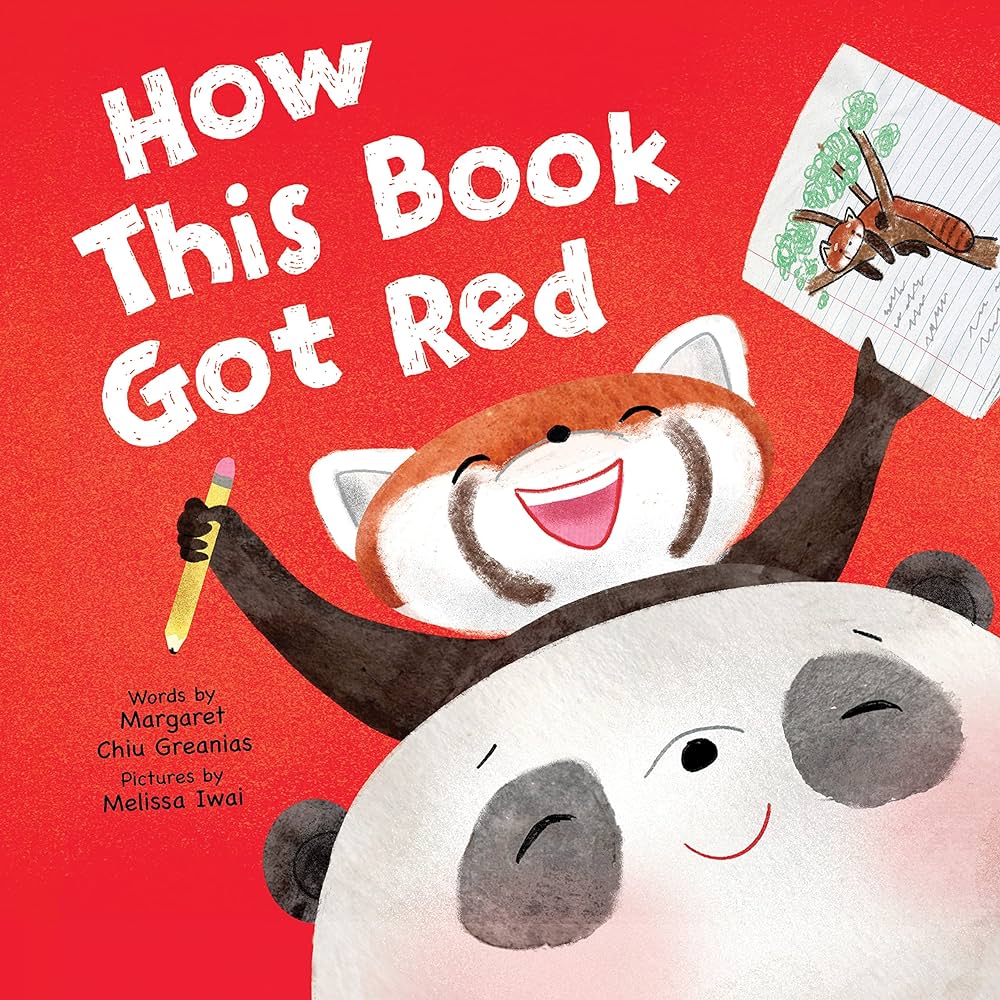
…here are five reasons why making reading
a part of your family road trip is a good idea!

Reason 1.
Because nothing is more hilarious than having Dad act out a girl part.

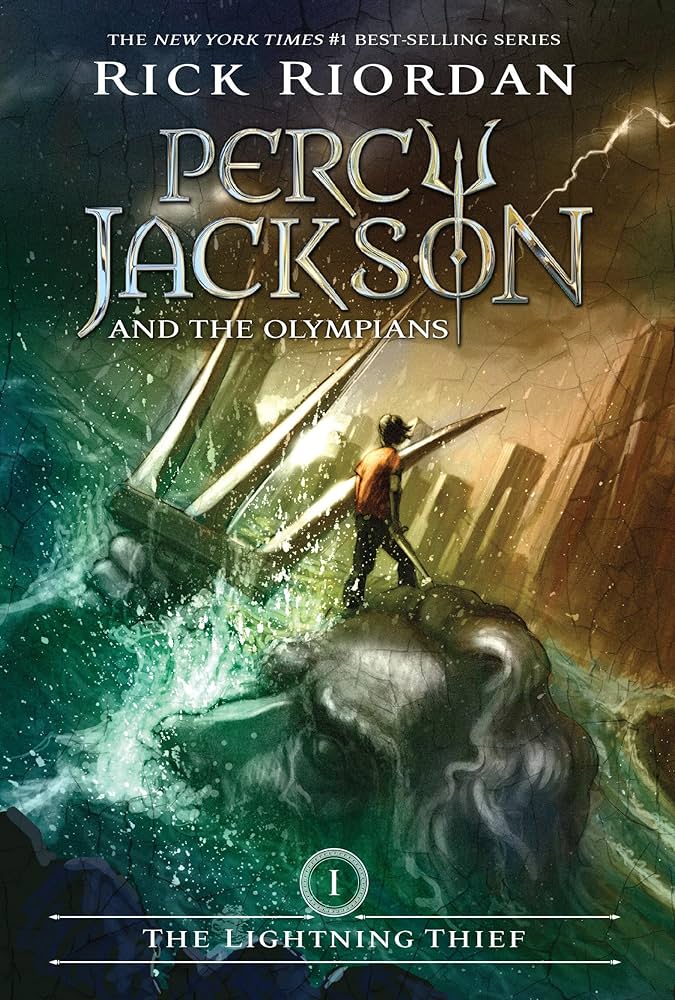
0375967559Entertaining the kids with some great read-alouds is a great way to keep them distracted. Try Mr. and Mrs. Bunny, Detectives Extraordinaire: a modern folktale  translated from the original Rabbit by Polly Hovarth. Madeline comes home from school to discover that her parents have been abducted by foxes. She hires Mr. and Mrs. Bunny to help her find them but they haven’t got Detective Licenses. Not to worry, the fedoras will do.

9781443119207You could also try Ungifted by Gordon Korman: Each chapter can be read by a different member of the family. Roles to read include: Donovan Curtis (I.Q. 112) the natural born troublemaker accidentally sent to the Genius Academy. Dr. Schultz (I.Q. 127) the school division’s Superintendent who will suspend him the minute he finds him. The child geniuses at the Academy: Chloe Garfinkle (I.Q. 159) and Noah Youkilis (I.Q 206) who just might learn something from a “regular” kid.

Reason 2.
Because they are a captive audience!

9781554683390This Dark Endeavour and Such Wicked Intent are Ken Oppel’s imagined prequels to Frankenstein. Here, Victor is a teenager growing up in the family Chateau with his twin brother Conrad and their cousin Elizabeth. Victor discovers secret rooms and banned books with knowledge so dangerous that they are forbidden to explore it. Of course, they can’t resist. Both books are great to read aloud. But why stress yourself? Pop in a CD and leave it to the professionals. Both are available as audiobooks on CD, read by Luke Daniels.

Reason 3.
Because it’s good to remind them their iPods can be eBook readers too! iPods, iPhones, Android tablets – they can all load library eBooks using the free OverDrive app. Here are some downloadable eBooks perfect for their fast pace and short length:

1554699789Prisoner of Snowflake Falls by John Lekich: Henry is being raised by criminals but can’t quite seem to get the “robbing” part of a B&E right. How will he survive the summer when his only guardian, Uncle Andy gets locked up again?

Guilty by Norah McClintock: Finn Newsome and Lila Ouimette are connected by a murder. Lila’s father happens to be Mrs. Newsome’s murderer but the real mystery is the motive. Why would Mr. Ouimette kill Finn’s new step-mother on the very day he was released from jail?

Reason 4.
Because a road trip is the perfect time to have a serious family discussion innocently wrapped up as a fun family book club.

The Reluctant Journal of Henry K. Larsen by Susin Nielsen. Henry has moved from his hometown and changed schools in order to hide his family’s past. Older brother, Jesse has been the victim of bullying and has taken action against his aggressor. Find out what your teens think about bullying and school violence.

9781554982974

My name is Parvana. The latest novel in Deborah Ellis’s Breadwinner series, Parvana is now a young woman, trying to help girls in Afghanistan get an education. She is arrested as a possible terrorist and wonders what will become of her in jail. Discover what your teens think about life and war in the Middle East.

Reason 5.
Because all of these titles are on the MYRCA list this year. If they read at least 5 of them, your kids can vote for their favorite. Visit www.myrca.ca for more information.

Happy trails!

- Colette

The Feminine Mystique Redux

Working-mum-0022

Is it a myth that women can raise a family while pursuing a career? While women may aspire to embrace both, getting ahead in the workplace is not easy despite the battles fought for gender equity. A recent Globe and Mail article warned that Canadian women hold fewer top jobs which could have negative implications for growth as women provide powerful input into the economy.

How to address this gap is the premise of Lean In by Sheryl Sandberg, COO of Facebook.  Fifty years after the publication of The Feminine Mystique by Betty Friedan and hard on the heels of an Atlantic Monthly essay “Why Women Still Can’t Have It All” comes Lean In, a new feminist rallying cry which sits at number 1 on numerous bestseller lists.

femmystAs related in Promised Land: Thirteen Books That Changed America, Friedan’s The Feminine Mystique “prompted a new way of thinking about sexual politics” that led the way to the advances of second-wave feminism. In the era of “Mad Men”, Friedan examined the post war “feminine mystique” which enticed many women to abdicate their jobs to returning WW2 vets and to assume the roles of housewives and mothers.  The resultant ennui and discontent dubbed “the problem that has no name” caused many women to ask “is this all?” The book inspired Gloria Steinem and others to fight against the barriers for women in academia and the workplace.

Despite the hard won advances by feminists, women still face obstacles. While more women are graduating with professional degrees than ever, only 10 % of directors on public company boards in Canada are women. The glass ceiling is still waiting to be shattered.

leaninSandberg’s thesis in Lean In is that “women need to more actively seek success and advancement in the workplace.” She believes that women self-sabotage by seeking perfectionism in the domestic sphere as well as the professional one.  Trying to keep all the balls in the air results in overwork and exhaustion. A misguided nostalgia for escape into domesticity, especially among highly educated women who can afford to do so, entices women to drop out of the workforce. Careers are abandoned and re-entry is rarely easy. The goal to be the perfect mother and excel in the office is unattainable and consequently the female input into making decisions that most affect our world is lost.

Sandberg argues that women are not aiming high enough – their ambition is stalled by their own low expectations and lack of confidence. “Women are compromising their career goals for their partners and children” and leaning back when they should be ambitious and aspiring to senior positions. They need to negotiate shared household duties with their spouses and not worry about “having it all.” Done is Better than Perfect reads her favourite poster on the wall at Facebook.

How much is women’s failure to advance a result of their own shortcomings or the fault of corporations? Women should not shoulder all the blame. Workplaces need to promote family friendly policies including a minimum number of annual paid leave days for child or elder care, flex time, telecommuting or even onsite childcare to ensure work/life balance issues are addressed.

For further advice on career/family issues try:

valueKnowing your Value : Women, Money and Getting What You’re Worth looks at the ways women get in their own way and gives inspiring advice from prominent women.

shouldnt   I Shouldn’t Be Telling You This offers practical strategies from asking for what you want to owning the room to being the boss of your personal life too.

conflictThe Conflict : How Modern Motherhood Undermines the Status of Women is a “scathing indictment of a stealthy zealotry that cheats women of their full potential.”

At the very least, books like these cause women to think again about redefining success, changing expectations and asking more from others in order for both genders to “have it all.”

Jane

Our newest Book Club: Cook by the Book

Vegetables and cheese

Welcome to Winnipeg Public Library’s newest book club & blog – Cook by the Book – a book club for foodies!

Here’s how it works: members of Cook by the Book choose a cookbook available at the library, based on the monthly theme, and then make one or two recipes at home. We all take pictures of our culinary creations, and then we get together to share our experience – good or bad – with the group.

The theme for our first meeting was Favourite Food Network Stars. Most of us were pretty happy with our results, but there were a few flops – skip Guy’s Caesar salad! Our discussions ranged from trying truffle oil for the first time to lusting after Michael Smith’s pantry. I also discovered there’s a great butcher in St. Vital and that you can get hard-to-find Mexican ingredients on Sargent Ave.  I think we were all impressed that Tanise did her own “throwdown” with her friends,  using the Philly cheesesteak recipes from Bobby Flay’s Throwdown. We finished off the evening with pear cake with bacon caramel sauce – I know it sounds weird, but really, how can you go wrong with bacon?

Here’s the pictures we took and cookbooks we tried – Click on any image to go full-screen!

All of these titles are available at Winnipeg Public Library, so check at your local branch if you’re interested in trying out some new recipes.

Registration is full for this session, but we’ll start up again in the Fall. Watch for details in the September issue of @ the Library.

- Carole

Live and Learn

“The illiterate of the 21st century will not be those who cannot read and write, but those who cannot learn, unlearn, and relearn.” ~Alvin Toffler

You learn something new every day. Sure, it’s a cliché, but it’s not without a grain of truth. We are all engaged in learning on a daily basis, whether we are conscious of it or not, and whether we desire it or not. Taking a new route to work because of construction is not necessarily as fun or desirable as figuring out the latest online game, but both scenarios involve learning.

Teaching as well as learning has changed a great deal in the last hundred years, from one room schoolhouses to classrooms in the cloud. One of my favorite books about teaching is Why Shoot the Teacher by Max Braithwaite, a hilarious autobiographical account of his days teaching in a one room school on the prairies during the 1930’s, when one set of encyclopedias was used for all of the students, who ranged in age from 4 to 20.

More recently,  A.J. Jacobs took on the mammoth task of reading the entire Encyclopedia Britannica in one year. Did he learn anything? Read his book The Know-It-All and be the judge.

The tools used for teaching have changed, but has the process of learning changed as well? Vast amounts of information are available on the internet, and it does seem that there’s an app for everything. However, you still need to learn how to interpret and apply the data from the internet, and until you learn how to use that app it’s worse than useless. Some writers, like Nicholas Carr, believe that since the advent of the internet we are losing our ability for deep thought and analysis. His book The Shallows examines the impact of changes in technology through time, from ancient Greece to Google, and shows how learning has been transformed by the tools used to teach.

In this ever evolving world of technology, can we still learn from concepts originating thousands of years ago? Is there a true distinction between knowledge, information and wisdom?

Wisdom, by Stephen S. Hall, explores the concept of wisdom throughout the ages, as well as how life experiences influence learning. Barry Schwartz and Kenneth Sharpe’s book Practical Wisdom advocates the use of Aristotelian principles in both learning and life, as guidelines to cultivating a greater understanding of the world around us.

These days, we’re all expected to learn, re-learn and retain a great deal of new information and technology, not to mention all of those pin numbers and online passcodes. Understanding how the human mind works can help us to master all of the current complexities of life. Brain rules by John Medina covers 12 principles that demonstrate how our minds and memories work, and methods to help maximize the brain’s natural abilities. This Will Make You Smarter is a collection of essays designed to enlarge the way we view learning and cognition. The authors of these pieces come from a variety of backgrounds, each with a unique vision and viewpoint on how we as humans think, learn, and behave.

Libraries and learning have been partners since ancient times. In a world filled with changes, libraries and the people who work there remain a tremendous resource for learning, no matter what you’re interested in, or how you want to learn it. These days, the choices for how to learn something range from print to audio to online, and everything in between. No matter if you’re a visual or audio learner, the library offers the best of both worlds with access to databases like Mango, a language learning program, and World Book: Discover, which takes the traditional encyclopedia experience to a whole new level.

Live, learn and prosper!

Lori

Aside

“I never understood the frequency…
I couldn’t understand…”
From the song What’s the Frequency, Kenneth?
By R.E.M. (from the album ‘Monster’)

I’ve always felt that I’d never understand Marshall McLuhan. But looking past what I took to be mere clichés, witticisms, and celebrity-seeking statements of the outlandish, I now find that his message about how people use technology – and how they feel about the technology they use – offers tremendous insight.

One of many essential ideas of McLuhan is that the modern technology we use ‘is the extension of the nervous system in the electronic age’ (from Paul Benedetti & Nancy DeHart, eds, Forward through the rear-view mirror: reflections on and by Marshall McLuhan, p. 147). If I am ‘understanding McLuhan’ properly (which I am never certain) that smart phone or other mobile device is actually connected to our body, it becomes one. This runs counter to many modern critiques (like Jaron Lanier’s You Are Not a Gadget) of how technology is taking over too many aspects of our personal lives.  For McLuhan the moral compliant is beside the point; it is happening whether we like it or not, the more important issue is to understand it.

For me the fascinating element is that he could only use the examples of his real world of radio, television, and the emerging power of computers, but it was not a great leap of logic for him to anticipate the internet, and probably more powerfully, social media. McLuhan takes the entire information technology explosion as a return to a ‘oral culture’, which challenges and overturns the power of print. As print moved from ideograms to an alphabet and then to formal language, it allowed abstract ideas and norms to be deemed official and correct.

If electronic technology is the modern return to oral culture, it is best expressed  by social media: we update our personal pages, we follow and are followed, and there is no right or wrong but only our individual thoughts, emotions and feelings. It truly is an electronic version of oral culture where the appearance of hierarchy is abolished, or at least buried under the surface. (I’m not going to  take on the issue of manipulative advertising, exposure to propaganda and temptations to hunt for witches and find scapegoats here.)

How this relates to our politics, our relationships with each other, and how we conduct ourselves is an open question…but taking a twist to the R.E.M. song…

“…I think I understand!..”

Thanks for the frequency, Marshall!

For more on this topic, check out:

toomuchmagic
Gutenberg Galaxy
 
by Marshall McLuhan
The Medium is the Message by Marshall McLuhan
Marshall McLuhan by Douglas Coupland (Extraordinary Canadians series)
The Virtual Self by Nora Young
Too Much Magic by James Howard Kunstler
iDisorder by Larry Rosen


- Phil

It’s a Dog’s Life

Nothing lifts my spirits or gives me a better laugh than watching comical videos many dog owners post on the Internet. Whether it is some sort of trick, or a funny scenario, it never ceases to amaze me how incredibly intelligent and receptive our four legged friends are – particularly when a reward of some sort is involved. The videos often showcase the bond between a dog and their master, invariably featuring a wagging tail paired with laughter and enjoyment on the part of the teacher.

Entertainment that includes trained dogs has long been part of popular culture. Many of us grew up watching various movies and TV shows that highlighted dogs in various familial situations. For example, in the 1950’s there was Lassie and Old Yeller and later on Beethoven, Benji, Eddie from Frasier, and Marley from Marley and me. However, my first real exposure to the truly strange things people will teach their pets was the “stupid pet tricks” segment on the David Letterman show. People from across North America brought their pets on stage to perform for the viewing audience. The sillier the trick, the more it evoked laughter and amazement (and sometimes a cringe worthy reaction).

Yes, without question the lengths that people will go to have their pets emulate human behaviour(s) is quite inspiring. Case in point is this recent video on CNN narrated by the very deadpan Jeanne Moore,featuring a dog eating peanut butter with a spoon.

While hilarious, I selfishly tend to lean towards the more practical. Sometimes before I leave the house for work and the place is clearly upside down, I look over at our dog with envy. Most days he lies contently, bathing in the light streaming from the kitchen window. While I don’t begrudge his pleasures and tranquillity  I must admit the thought has crossed my mind – what if our Rocky could help out with some light housework while we are at work?  Life would be so much simpler. After all, many dog breeds have served and continue to serve important functions ranging from working in an agricultural context to assisting the visually impaired as well as police and rescue. Check out Jessie’s remarkable housekeeping prowess to see that anything is possible!

More realistically, we have recently upped the ante by attempting to graduate our dog from simple sitting and fetching to learning how to smile and even crawl. Unfortunately, no amount of treats or encouragement has interested him in becoming more adept at these behaviours, and if nothing else, we have come to understand that many hours of training is required for what looks like the simplest of tasks.  Of note are the variety of training resources that employ assorted techniques and strategies based on different schools of thought that are available at Winnipeg Public Library.  These include:

training 7Cesar Millan’s short guide to a happy dog [sound recording] : [98 essential tips and techniques]  by Cesar Millan.
Uses Cesar Millan’s unique insights about dog psychology to create stronger, happier relationships between humans and their canine companions. Both inspirational and practical, A Short Guide to a Happy Dog draws on thousands of training encounters around the world to present ninety-eight essential lessons.

TrainTrain your dog positively : understand your dog and solve common behaviour problems including separation anxiety, excessive barking, aggression, housetraining, leash pulling, and more by Victoria Stilwell.
This book offers counselling to dog owners on how to train their pets using positive reinforcement, offering insight into how a dog thinks, feels, and learns to suggest the best approaches to treating behavioural problems.

Training2Training for both ends of the leash : a guide to cooperation training for you and your dog by Kate Perry and Yvonne Conza.
Helps an individual develop the tools and understanding required to be the best trainer for a new puppy or adult dog-it’s never too early or late to start!

Training 3Training the best dog ever : a 5-week program using the power of positive reinforcement by Dawn Sylvia-Stasiewicz and Larry Kay.
An award-winning program of positive reinforcement and no-fail techniques, Training the Best Dog Ever takes only 10 to 20 minutes a day; works whether you’re training a puppy or an adult dog, even one with behavior problems; and requires no special dog-handling abilities.

training4Barron’s dog training bible by Andrea Arden
Author Andrea Arden is a well-known trainer who currently works on Animal Planet’s shows, Underdog to Wonderdog, Dogs 101, and Cats 101. She stresses the importance of understanding canine psychology and a dog’s learning capacity as necessary prerequisites to effective and humane training.

training5Clicker training by Katharina Schlegl-Kofler
Clicker training is an animal-friendly positive reinforcement method that really works for training dogs. This manual gives detailed instruction to dog owners, inexperienced pet owners, those planning to acquire their first pet, and older
children looking for pet care information. Each title features
approximately 70 color photos and offers practical advice on purchasing,
housing, feeding, health care–and where applicable, grooming and training
pets.

training 6Your dog : the owner’s manual : hundreds of secrets, surprises, and solutions for raising a happy, healthy dog by Marty Becker with Gina Spadafori
Through surprising facts, moving stories and tested solutions, the veterinary expert from Good Morning America and The Dr. Oz Show will give every dog owner the secrets to raising a healthy,well-behaved dog. For anyone who owns a dog or is thinking about getting one, Dr. Marty Becker’s manual is a must-have guide to anything and everything canine.

Harriet

The Trail is the Thing

“The trail is the thing, not the end of the trail. Travel too fast, and you miss all you are travelling for.” - American author Louis L’Amour

I was caught off guard last week when I saw the news that the American Jewish writer E.L. Konigsburg had died. She was 83. Death jars because it seems so final, the very end of the trail. I don’t know about you, but it makes me sit up, and remember. Especially now after my dad passed on last summer.

Back when she was an aspiring writer, Konigsburg penned – when authors still used pens! — a novel that won her the 1968 Newbery Medal for the best American children’s book of the year. Recently it was named one of the ‘Top 100 Chapter Books’ of all time by the School Library Journal.

The book mixedupwas From the Mixed Up Files of Mrs. Basil E. Frankweiler. I remember it not because I read it. It was read to me and my classmates by my well-liked Grade 5 ‘literature arts’ teacher in the early ’70s. I distinctly remember sitting transfixed in my desk as my teacher gazed out the window into the empty schoolyard before launching into a thrilling narration of the exploits of young Claudia Kincaid and her even younger brother Jamie. These two kids had the nerve to run away from home and hide out in the washrooms and exhibits of New York’s Metropolitan Museum of Art  overnight! After sleeping in an antique bed, while avoiding the security guards, they blended into visiting school groups during the day. It didn’t take long before they were busy investigating a mysterious Renaissance-like angelic statue the museum had recently purchased — from the narrator, as it turned out, the enigmatic Mrs. Basil E. Frankweiler.

Why has this memory stuck with me so vividly I wonder? It must have been the similar ages of the characters with my own, but it was also the thrill of risks not taken in my own life, but explored so well in story. Have you a favourite story read to you in elementary school?

index.aspx

Other notable books by Konigsburg that we have in the library’s collection is The View from Saturday and Father’s Arcane Daughter.

As I was saying my dad, Norman Penner, passed on. He was 82. He spent many fruitful years as a teacher-librarian and independent book store owner in Saskatchewan and Alberta, while raising a family of 3 with my mom. He loved reading, and listening to people’s stories, among other pursuits.

wanderingAfter his death, a generous and thoughtful friend gave a donation – through the Friends of the Library – in my dad’s honour. He presented me with a bookplate sticker to place in a library book of my choosing! After a long period of indecision I decided on Education of a Wandering Man, the autobiography by Louis L’Amour, one of my dad’s favourite authors. (L’Amour was a prolific American Western writer who had at the time of his death in 1988 had an amazing 105 works in print.)

So I walked up to the Millennium Library’s fourth floor biography section, found the book, and holding back a tear, placed the sticker on the title page. I returned the book to its rightful place on the shelf, and there, right beside, was a familiar title, Traveling Mercies by booksAnne Lamott. I stared in amazement. ‘Travelling Mercies’ is the title of a little personal essay I am writing about my trip to Alberta last year that includes thoughts about my dad and his passing. The trip had been a meaningful time of reflection, connection with family and old friends, and unusual experiences of accompaniment.

Seeing the book with that title (which includes the author’s reflections of her own dad’s passing!) beside the book I had chosen gave me a shiver down my spine. What were the odds? What is the meaning of this syncronicity? Whatever its means I’m glad it happened. I think my dad would have loved the story of the bookplate, my friend’s generosity, and the stories contained in the books themselves. He loved hearing stories, and I guess, so do I.

Lyle